

Godh Bharai invitations: Seemantham, Valaikappu and what to write
Godh Bharai means filling the lap. It is the Indian baby shower, held in the later months of pregnancy, and it is one of the warmest functions in the whole calendar because it is almost entirely run by women of the family for one woman.
The name changes considerably across India, and so does what actually happens. This page covers the main versions, the timing, and wording for the invitation.

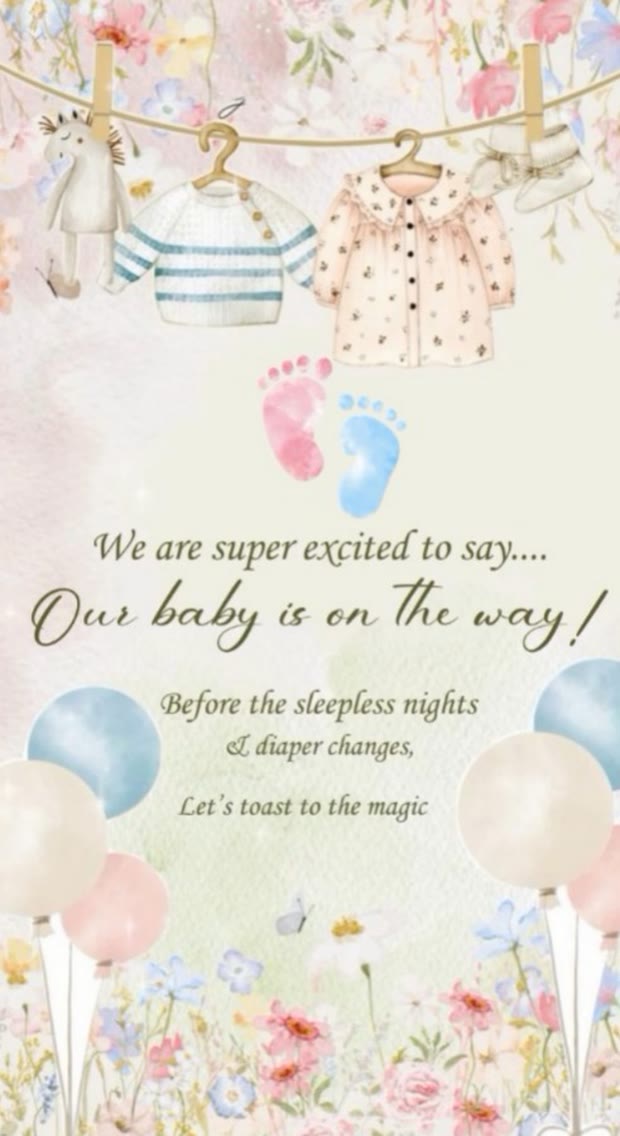
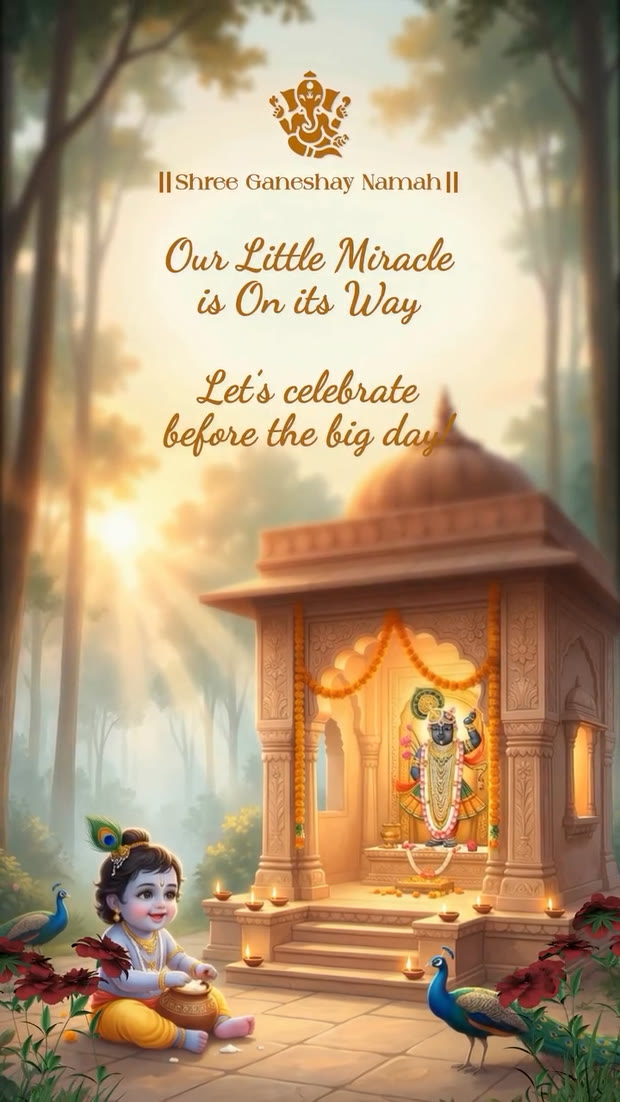
The same idea, four different ceremonies
| Name | Where | What is distinctive |
|---|---|---|
| Godh Bharai | North India | The mother to be is seated, and her lap is filled with fruit, dry fruits, sweets and gifts by the married women present. |
| Seemantham | Telugu and Tamil Brahmin families | A formal samskara, Seemantonnayana, with a puja. The parting of the mother's hair is ceremonially combed upward. |
| Valaikappu | Tamil Nadu | Glass bangles are put on the mother's arms, often dozens. The sound is believed to reach the baby and to be protective. |
| Shrimantham | Maharashtra and Gujarat | Often includes a puja, green bangles and a green saree, with the colour representing fertility and new life. |
When it is held
Usually in the seventh or eighth month. The traditional reasoning is practical as much as ritual: late enough that the pregnancy is well established, early enough that the mother can comfortably sit through a function.
In many families it is hosted by the mother's own parents, and it is followed by her staying at her parents' home until the birth. If that is your family's practice, the Godh Bharai doubles as a send off, which changes the mood and often the guest list.
Two to three weeks of notice is plenty. Do not schedule it too close to the due date, and be ready to move it, because this is the one function that genuinely may need rescheduling at short notice.
What to put on the invitation
- Whether it is women only. Many are, some are not, and men will ask.
- Any colour theme, since green, yellow and pink are all traditional depending on the region.
- Whether to bring bangles, if it is a Valaikappu or a variant that includes them.
- Gift guidance, if you have any. Many families ask for no gifts, or for something for the baby rather than the mother.
- A start time that is realistic, since the mother to be should not be sitting for six hours.
Godh Bharai invitation wording you can copy
Copy any of these and change the names, dates and places. They are written to be read out loud, so they sound right on a phone screen too.
There is someone new on the way.
Godh Bharai for [Name]
[Day, Date] · [Time]
[Venue]
Come bless her, eat with us, and guess the name.
With joy and gratitude,
we invite you to the Godh Bharai of
[Name]
[Day, Date] · [Time]
[Venue]
Your blessings for the mother and the little one would mean everything.
Khushiyon ki dastak,
[Naam] ki Godh Bharai ki rasm
[Din, Tithi] · [Samay]
[Sthaan]
Aap sabhi mahilaon ka sadar swagat hai. Aashirwad dene zaroor aaiye.
Valaikappu for [Name]
[Day, Date] · [Time]
[Venue]
Please bring a pair of bangles if you can. Green and red are traditional, but anything you love will do.
Want these words on a real invitation website? See the designs
Godh Bharai Invitation invitation designs
2 designs you can personalise, from ₹2499. Tap any one to open it full size with a live demo.
Questions people actually ask
When is Godh Bharai held?
Usually in the seventh or eighth month of pregnancy. Late enough for the pregnancy to be well established, early enough for the mother to sit comfortably through the function.
What is the difference between Godh Bharai, Seemantham and Valaikappu?
They are regional versions of the same idea. Godh Bharai fills the mother's lap with gifts, Seemantham is a formal samskara with a puja, and Valaikappu centres on putting glass bangles on her arms.
Why bangles at a Valaikappu?
Dozens of glass bangles are put on the mother's arms and the sound is believed to reach the baby and to be protective. It is the defining element of the Tamil version.
Is Godh Bharai women only?
Traditionally yes, and many families keep it that way. Plenty of families now include men. Say which on the invitation, because guests will ask.
Who hosts it?
Often the mother's own parents, and in many families she then stays with them until the birth, which makes the function a send off as well.