

Engagement, Roka and Sagai invitations: which is which, and what to write
Engagement is the word most families use in English, but underneath it there are three or four distinct ceremonies that happen at different points and mean different things. Getting them confused on an invitation is a common and slightly embarrassing mistake.
This page sorts out which is which, who hosts each one, and gives wording for the version you are actually having.

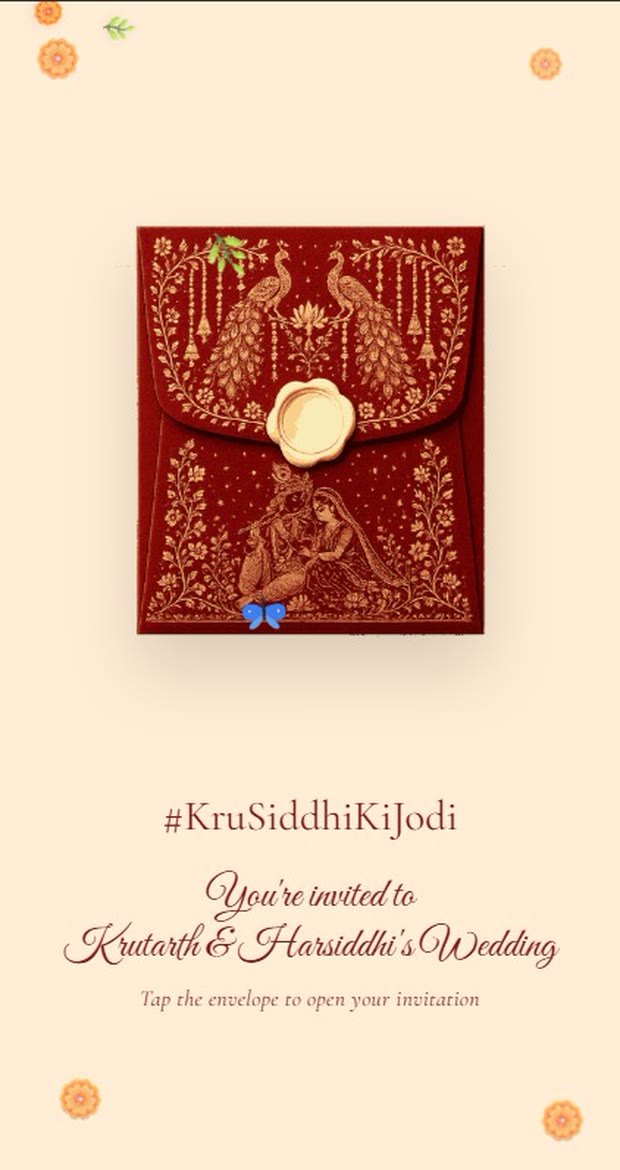


Roka, Sagai, Mangni and Tilak
| Ceremony | What it is | Usually hosted by | When |
|---|---|---|---|
| Roka | The first formal agreement between the families. The name comes from stopping the search on both sides. Often only elders attend. | Bride's family | Anywhere from a year to a few months before |
| Sagai or Mangni | The ring ceremony. Rings are exchanged, and it is now the function most people mean by engagement. | Either family, often jointly | Weeks to months before the wedding |
| Tilak | A groom side ceremony where the bride's male relatives apply a tilak and present gifts. | Groom's family, at their home | Close to the wedding |
| Chunni Chadhana | The groom's mother or sisters drape a chunni on the bride and give her jewellery, formally accepting her. | Groom's family | Often on the same day as Roka or Sagai |
Whose name goes on the invitation
This causes more friction than it should, so it is worth being deliberate.
If the bride's family is hosting, the invitation traditionally comes from her parents and names the groom as the son of his parents. If it is a joint function, name both sets of parents, and put the host family first. If the couple is inviting people themselves, which is increasingly common, then simply say so and drop the third person formality entirely.
On whether the groom's name or the bride's comes first, both are done and it varies by community. Ask both families rather than assuming, because in some households the order is read as a statement.
How much notice to give
- Roka: often two to three weeks, sometimes less, because the guest list is small and mostly local family.
- Sagai or engagement party: three to six weeks. Guests travelling from other cities need longer.
- If it is a destination engagement: eight weeks minimum, and send a save the date well before the real invitation.
One thing worth adding to the invitation, especially for a Roka: whether the wedding date has been fixed. Half the room will ask within the first ten minutes, and putting a line on the invite saves the same conversation forty times.
Engagement invitation wording you can copy
Copy any of these and change the names, dates and places. They are written to be read out loud, so they sound right on a phone screen too.
We said yes.
[Name] and [Name]
are getting engaged
[Day, Date] · [Time]
[Venue]
Come eat with us.
Mr and Mrs [Surname]
request the pleasure of your company
at the engagement ceremony of their daughter
[Name]
with
[Name]
son of Mr and Mrs [Surname]
[Day, Date] · [Time]
[Venue]
With the blessings of our elders, our families have come together.
Roka ceremony of
[Name] and [Name]
[Day, Date] · [Time]
[Venue]
We would love your blessings.
Do parivaron ke milan ke shubh avsar par,
[Naam] evam [Naam] ki Sagai
[Din, Tithi] · [Samay]
[Sthaan]
Aapke aashirwad ki abhilasha hai.
Want these words on a real invitation website? See the designs
Engagement Invitation invitation designs
6 designs you can personalise, from ₹2499. Tap any one to open it full size with a live demo.


Questions people actually ask
What is the difference between Roka and Sagai?
Roka is the first formal agreement between the two families, often with only elders present. Sagai is the ring ceremony and is what most people mean when they say engagement. Roka comes first, sometimes by many months.
Who hosts the engagement, the bride's side or the groom's?
Roka is traditionally hosted by the bride's family, Tilak by the groom's. The ring ceremony is often joint today. Whoever hosts is usually named first on the invitation.
How far in advance should engagement invitations go out?
Three to six weeks for a normal engagement party, two to three weeks for a small Roka, and at least eight weeks if guests are travelling.
Do we need to have the wedding date fixed before the engagement?
No, and often it is not. If it is fixed, put it on the invitation, because you will otherwise be asked all evening.
Should the groom's name or the bride's come first?
Both are correct and it varies by community. Ask both families, since in some households the order is read as a statement about the match.