

Nikah invitations: Mehr, the Nikah Nama, Walima and what to write
A Nikah is a contract. That is not a cold way of describing it, it is the actual structure of the ceremony, and understanding it makes the invitation much easier to write.
There is an offer and an acceptance, witnessed, with an agreed Mehr, recorded in a document both parties sign. Around that core sit the functions everybody photographs: the Mangni, the Manjha, the Mehndi, and afterwards the Walima.
Practice varies a good deal between Sunni, Shia, Bohra, Memon and regional communities, so treat what follows as the common shape rather than one fixed rule.


What actually happens at the Nikah
- KhutbahThe Qazi or Imam delivers a short sermon on marriage and its responsibilities.
- Ijab and QuboolThe offer and the acceptance. The bride is asked whether she consents, and answers Qubool hai, traditionally three times. Her consent is a requirement, not a formality.
- Mehr is statedThe amount or gift is named openly in front of the gathering.
- Witnesses and signingThe Nikah Nama is signed by the bride, the groom and the witnesses. In many families the bride signs separately, in the women's section.
- DuaA prayer for the couple, and often for both families.
- Sweets and greetingsUsually dates or sweets distributed, then the congratulations begin.
Mehr and the Nikah Nama, explained plainly
Mehr is an obligatory gift from the groom to the bride. It is hers, not her family's, and not a dowry in reverse. It can be money, gold, property or something symbolic, and it can be paid at the Nikah or deferred by agreement. The amount is stated aloud because it is a public commitment.
The Nikah Nama is the marriage contract. It records the parties, the witnesses, the Mehr, and any conditions the couple has agreed. Conditions are permitted and are more common than people assume. It is also the document that matters administratively later, so keep the original safe.
Neither of these needs to appear on the invitation. They are worth understanding because guests ask, and because a couple who knows what is being signed has a better day.
Nikah, Walima and Rukhsati are three different things
| Function | What it is | Hosted by |
|---|---|---|
| Nikah | The contract and ceremony itself. | Traditionally the bride's family |
| Rukhsati | The bride's departure from her family home. Often emotional, sometimes immediately after the Nikah, sometimes days later. | Bride's family |
| Walima | The feast announcing the marriage publicly. It is a Sunnah, and it is the groom's family's responsibility. | Groom's family |
This matters for invitations because they frequently go out separately, to overlapping but different guest lists. If somebody is invited to the Walima and not the Nikah, or the other way round, the invitation should leave no room for doubt.
Things worth stating on the invitation
- Separate seating, if there is any. Guests plan around it and would rather know in advance.
- Whether photography is welcome. Some families prefer none, or none of the women's section. Saying so on the invitation prevents an awkward conversation on the day.
- Whether there will be music. Practice differs and guests calibrate their expectations accordingly.
- Prayer timings, if the schedule works around Maghrib or Isha. Guests travelling in will want to know.
- Which functions each guest is invited to, spelled out. This is the most common source of confusion at Muslim weddings with three or four separate events.
Nikah invitation wording you can copy
Copy any of these and change the names, dates and places. They are written to be read out loud, so they sound right on a phone screen too.
Bismillah ir Rahman ir Raheem
"And among His signs is that He created for you mates from among yourselves, that you may dwell in tranquillity with them, and He has put love and mercy between your hearts."
Surah Ar Rum 30:21
With the grace of Allah, [Family] request the honour of your presence at the Nikah of
[Name]
with
[Name]
[Day, Date] · [Time]
[Venue]
Bismillah ir Rahman ir Raheem
Allah ke fazl o karam se,
[Naam] ki shaadi [Naam] ke saath
Rasm e Nikah
[Din, Tareekh] · [Waqt]
[Maqam]
Aap ki shirkat hamare liye baais e saadat hogi.
Bismillah ir Rahman ir Raheem
Walima
in honour of the marriage of
[Name] and [Name]
[Day, Date] · [Time]
[Venue]
Hosted by the family of the groom. Dinner will be served.
Bismillah ir Rahman ir Raheem
We are getting married.
Nikah · [Day, Date] · [Time] · [Venue]
Walima · [Day, Date] · [Time] · [Venue]
All the details, directions and RSVP are on this link.
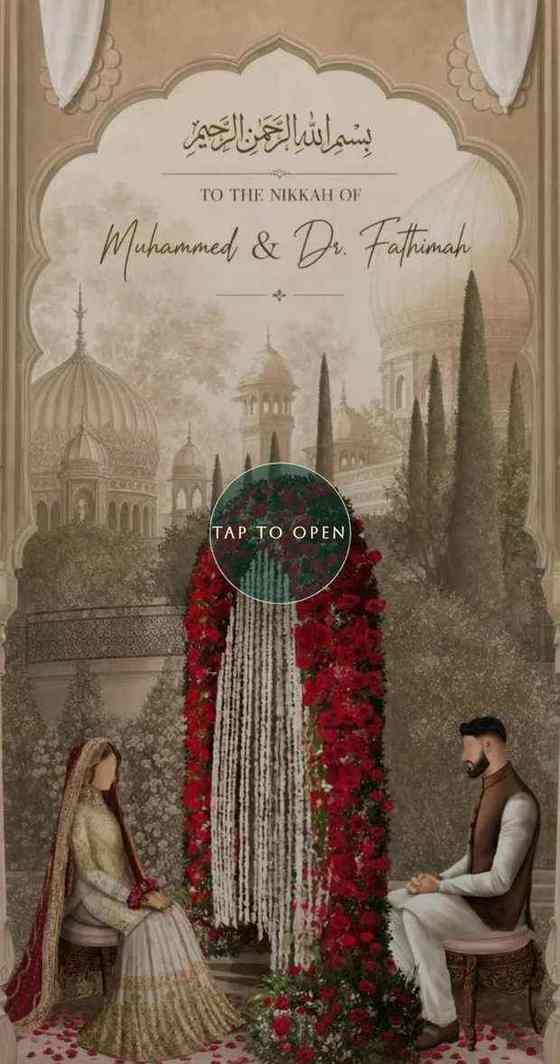
Want these words on a real invitation website? See the designs
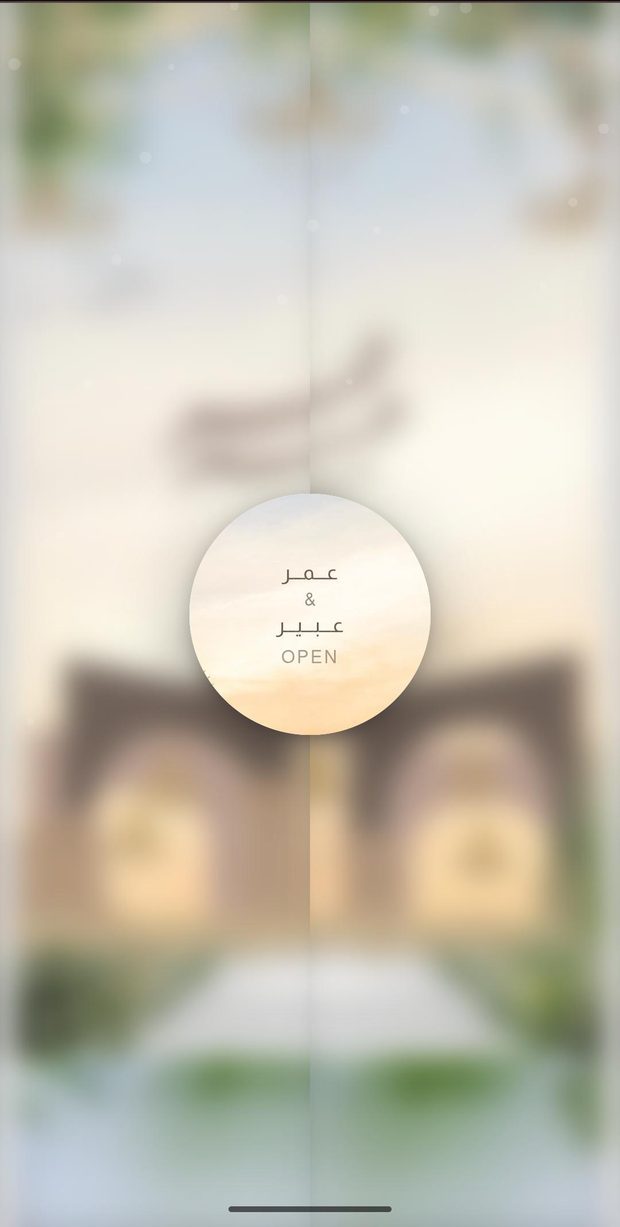
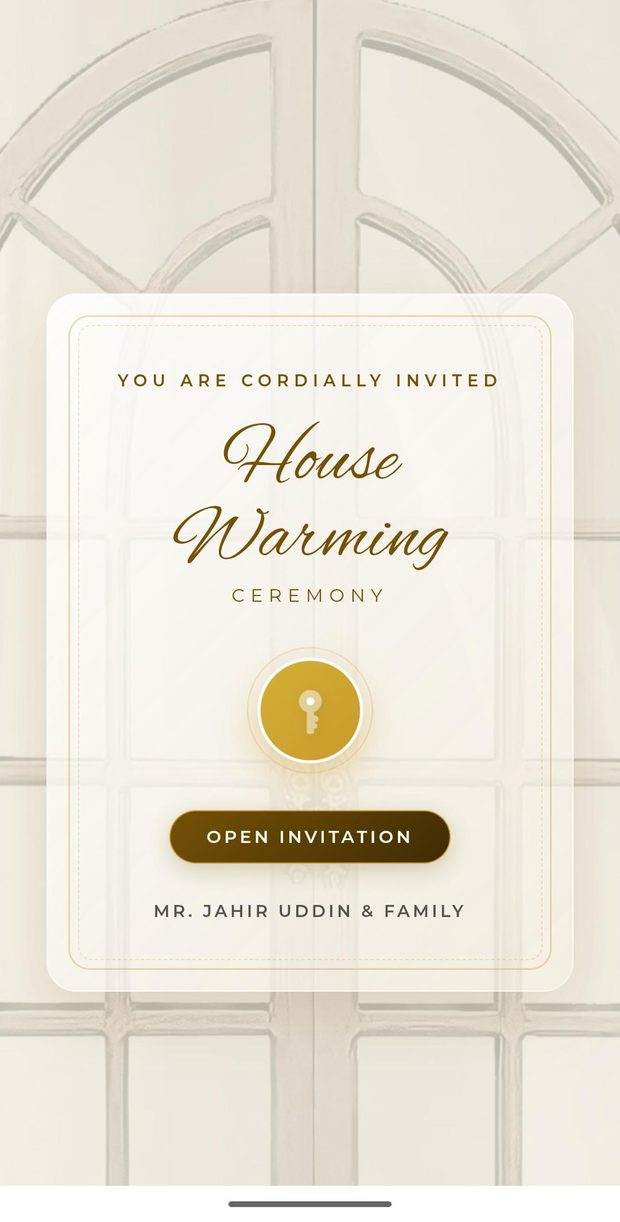
Nikah Invitation invitation designs
7 designs you can personalise, from ₹2499. Tap any one to open it full size with a live demo.

Questions people actually ask
What is Mehr?
An obligatory gift from the groom to the bride, which becomes her property. It can be money, gold or something symbolic, paid at the Nikah or deferred by agreement, and the amount is stated aloud during the ceremony.
What is the difference between Nikah and Walima?
The Nikah is the contract and ceremony, traditionally hosted by the bride's family. The Walima is the feast that announces the marriage publicly and is the groom's family's responsibility. They are often on different days with different guest lists.
Does the bride have to be present at the Nikah?
Her consent is required and is the heart of the ceremony. In many communities she is present in the same hall, in others she is in a separate section and gives consent before witnesses there. Practice varies, so follow your family and your Qazi.
Can conditions be written into the Nikah Nama?
Yes. The Nikah Nama can record conditions the couple has agreed, and this is more common than many people assume. Discuss it before the day rather than at the signing.
Should photography be mentioned on the invitation?
If your family prefers limited or no photography, yes. Saying it in advance is far easier than managing it on the day, and guests appreciate knowing.